
Vincent Price’s Friday Chicken
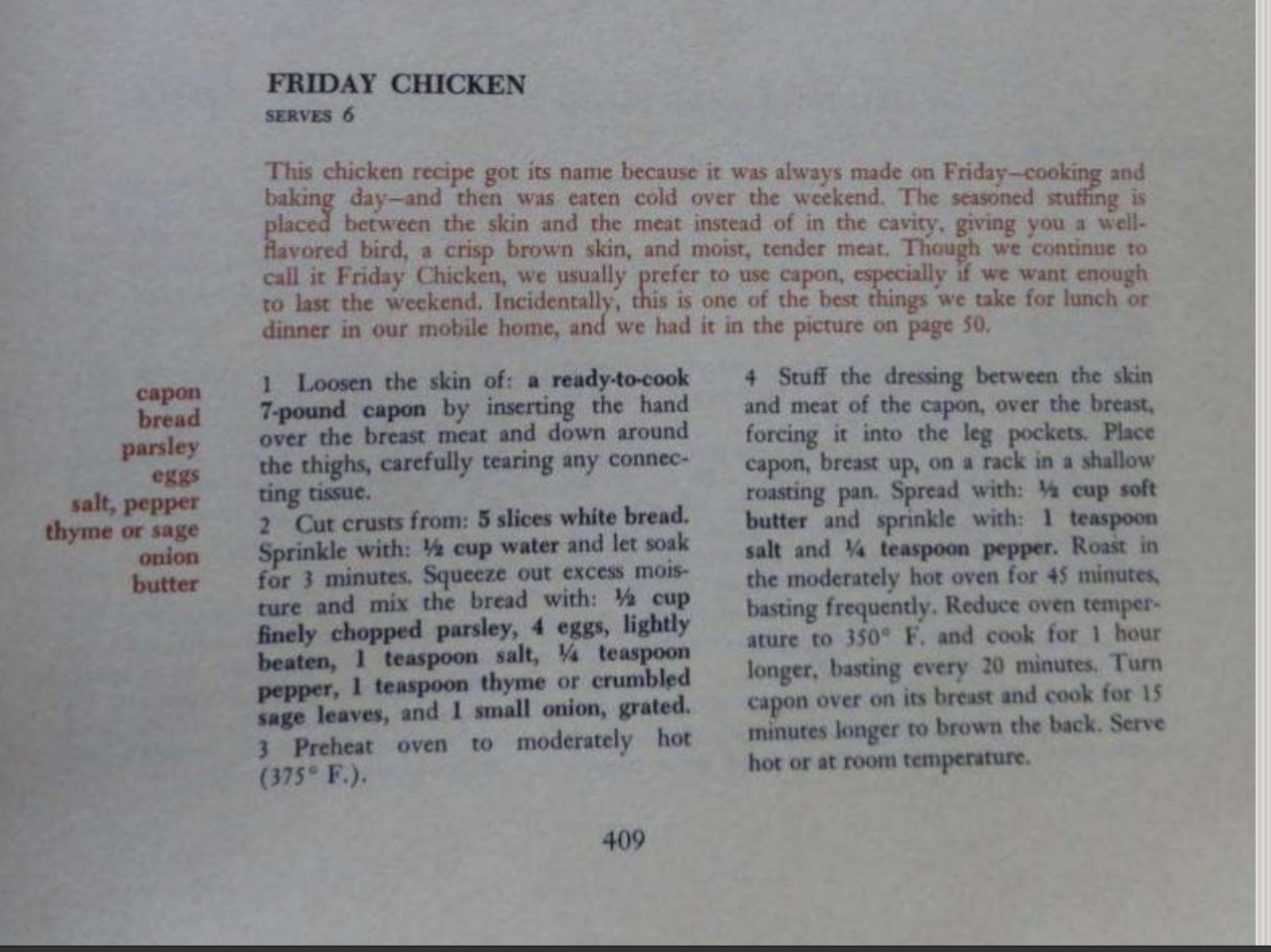
This recipe comes from the 1965 cookbook, “Treasury of Great Recipes by Mary and Vincent Price.”
First off, anything Vincent Price related, I am here for it. Pair it with cooking? SOLD! Ha ha! This dish was apparently one of his favorites to cook & serve at home. I think it’s a great one to enjoy & there are so many lovely side dish ideas you can use for it also. Friday Chicken was intended to be made on Friday (duh), enjoyed hot for dinner, and then eaten cold over the weekend. I love cold chicken, so this recipe became more and more appealing. Rather than stuffing the bird in the usual way, the seasoned bread dressing is tucked between the skin and the meat, helping to flavor the chicken while keeping the meat tender and the skin beautifully browned.
The original recipe calls for a seven-pound capon, which is a male chicken traditionally raised for its tender, flavorful meat. Although capons are not always easy to find today, a large roasting chicken makes a lovely substitute. Whether served warm from the oven or cold the next day, this is a wonderful example of the resourceful, comforting cooking found in vintage cookbooks.
Vincent Price’s Friday Chicken
Serves 6
Ingredients
- 1 ready-to-cook, 7-pound capon or large roasting chicken
- 5 slices white bread, crusts removed
- ½ cup water
- ½ cup finely chopped parsley
- 4 eggs, lightly beaten
- 1 teaspoon salt
- ¼ teaspoon pepper
- 1 teaspoon thyme or crumbled sage leaves
- 1 small onion, grated
- ½ cup softened butter
- 1 teaspoon salt, for seasoning the bird
- ¼ teaspoon pepper, for seasoning the bird
Instructions
- Lettuce
- Peeled tomatoes
- Mayonnaise, for garnish
- Watercress, for garnish
Instructions
Prepare the capon. Carefully loosen the skin by inserting your hand over the breast meat and working down around the thighs. Take care not to tear the skin, gently separating any connecting tissue.
Make the dressing. Remove the crusts from the bread and sprinkle the slices with ½ cup water. Allow the bread to soak for 3 minutes, then squeeze out the excess moisture. Combine the softened bread with the chopped parsley, beaten eggs, 1 teaspoon salt, ¼ teaspoon pepper, thyme or sage, and grated onion.
Preheat the oven. Heat the oven to 375°F.
Season and stuff the bird. Gently spread the dressing between the skin and meat of the capon, covering the breast and working some of the mixture into the pockets around the legs. Place the capon breast-side up on a rack in a shallow roasting pan.
Roast the capon. Spread the softened butter over the skin and sprinkle with the remaining salt and pepper. Roast at 375°F for 45 minutes, basting frequently.
Continue cooking. Reduce the oven temperature to 350°F and roast for approximately 1 hour longer, basting every 20 minutes.
Brown the back. Carefully turn the capon breast-side down and cook for an additional 15 minutes, or until the back is browned and the bird is cooked through. Check that the thickest parts of the breast and thigh reach a safe internal temperature of 165°F.
Serve and enjoy. Serve hot for dinner or allow the bird to cool promptly and refrigerate for enjoying cold over the weekend, just as the original recipe intended!
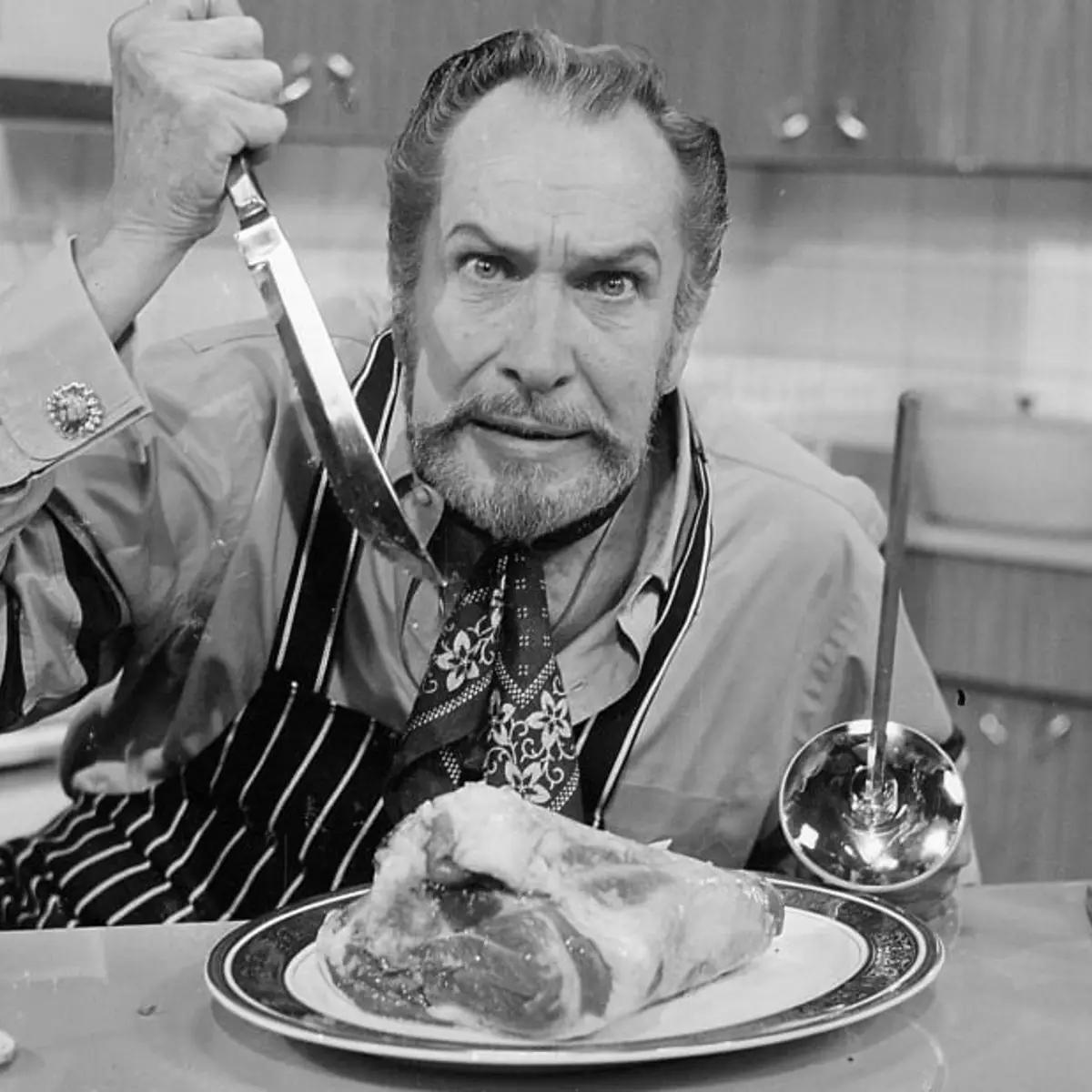
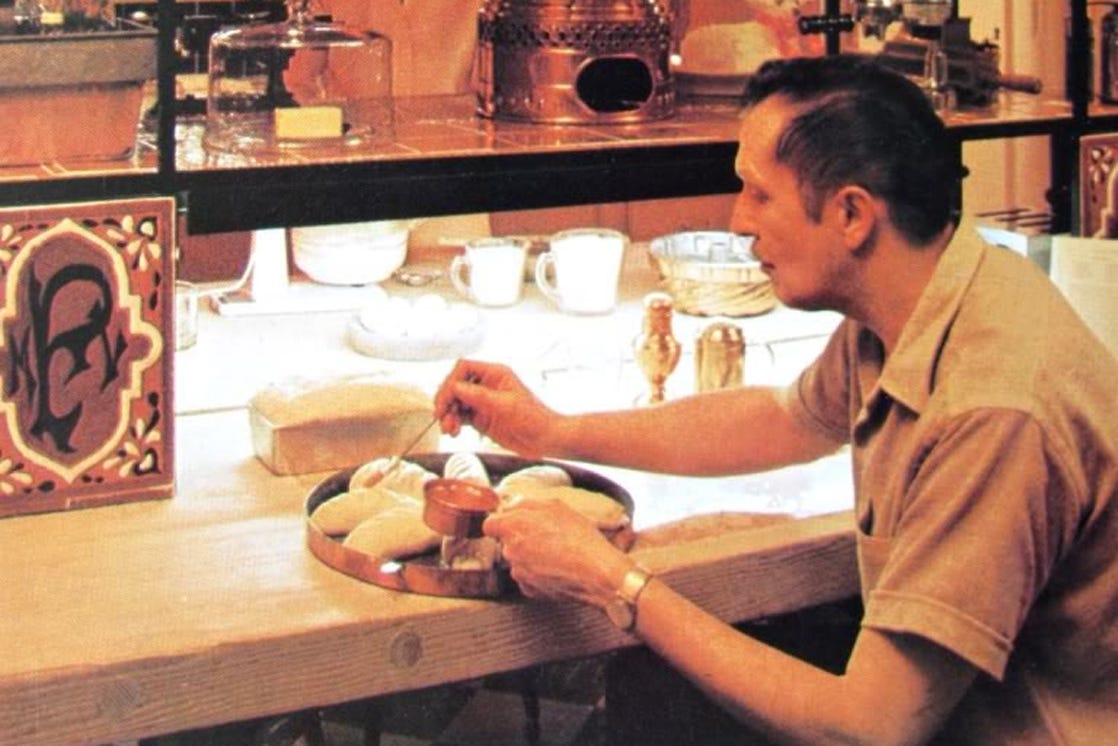

A Little Bit About Vincent Price
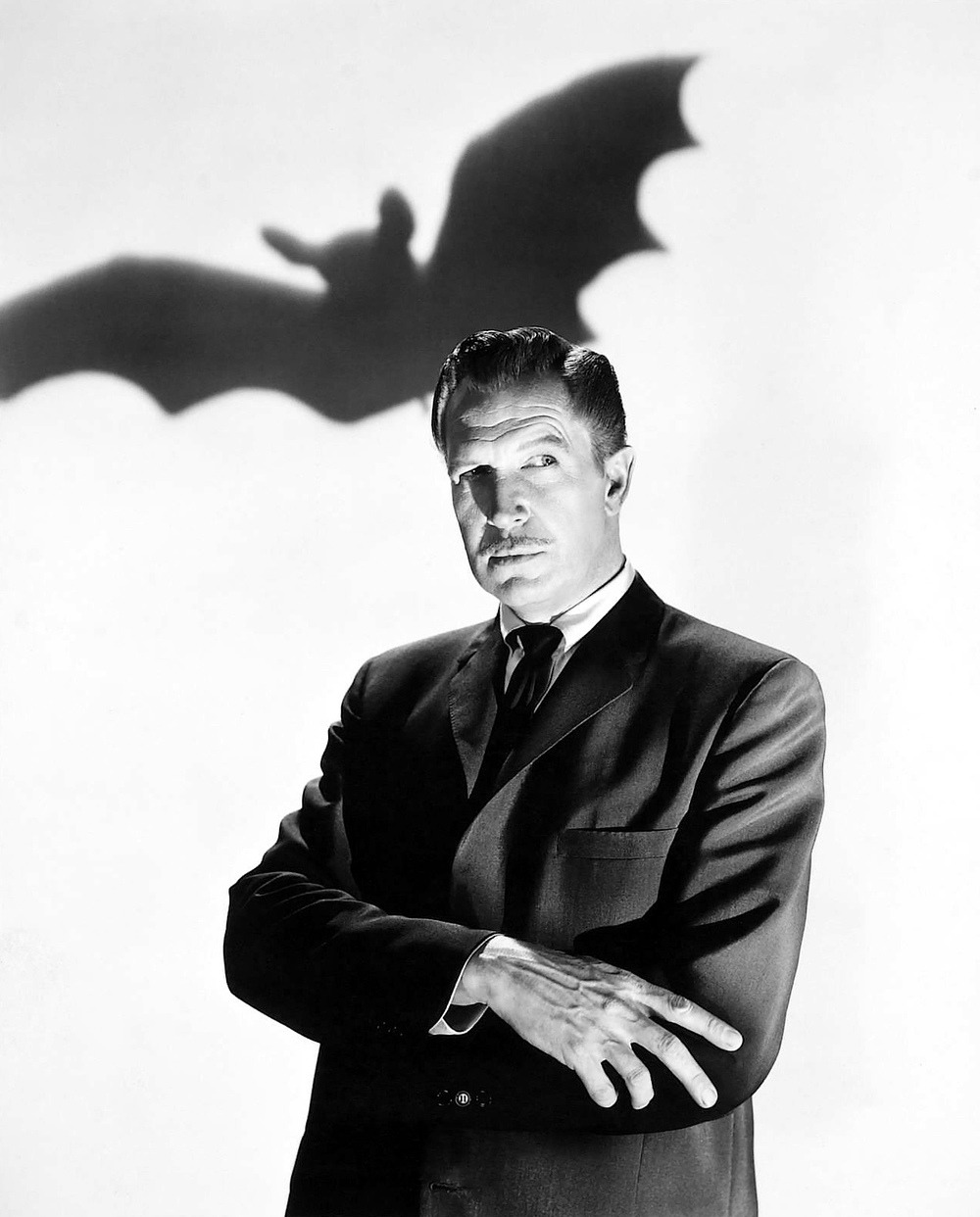
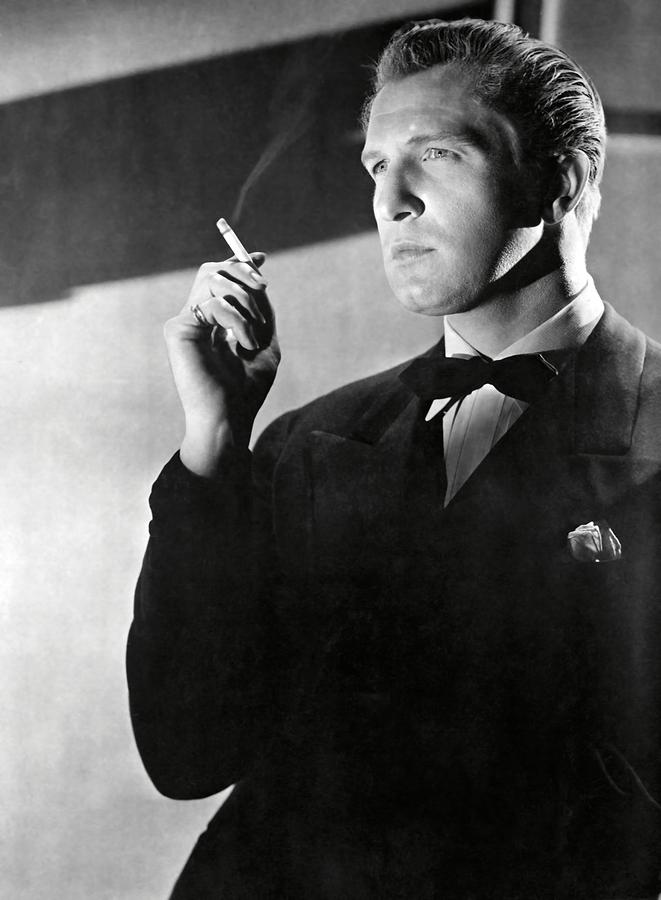
Vincent Price (1911–1993) was one of cinema’s most iconic figures, known for his distinctive voice, theatrical presence, and unmistakable charm. With his elegant manner, expressive face, and sinister delivery, he had a way of making even the most macabre things feel utterly captivating.
Best known for films such as House of Wax, The Fly, The House on Haunted Hill, and The Masque of the Red Death, Vincent became one of the most beloved faces of classic horror cinema. I have to say, there’s something particularly special about watching him on screen. He never seemed to rely on fright alone; there was always a certain theatricality and mischievous twinkle in his performances that made him impossible to look away from. He also had a fantastic sense of humor.
But there was so much more to Vincent than his association with horror. He was also a passionate art collector, an art historian, and a wonderful lover of food. Vincent and his second wife, Mary, shared a genuine enthusiasm for cooking and entertaining, and together they brought that passion into the kitchen with their A Treasury of Great Recipes, published in 1965. The book collected recipes inspired by their travels and meals at some of the world’s finest restaurants, making sophisticated cooking feel a little more accessible to home cooks. Vincent later shared his love of food in other cookbooks, too.
There’s something rather lovely in the contrast between Vincent’s screen persona and the man he was in life. Here was someone who spent so much of his career surrounded by ghosts, gothic gloom, and wonderfully theatrical horrors, yet who also devoted himself to celebrating art and beauty. Perhaps that’s part of what makes him so fascinating. The things that frighten us and the things that move us aren’t always as far apart as we might think. Sometimes, even in the darkest corners, there’s something beautiful to be found.
I hope you try and enjoy this lovely recipe! Perhaps follow it up with a Vincent film afterwards?